Seven Innocents
Tylenol Trail of Death
Thomas A. Braun, RPh
Health Advocate, Medical Writer, and Author
*****
The actual body count was higher. The FBI chased the wrong man for decades.
In 1982, terror struck when seven innocent people died after unknowingly ingesting cyanide-laced Tylenol. The Tylenol Murders became one of the most notorious crimes in American history—but they may have been only the visible surface of a deeper, darker story involving corporate secrecy, revenge, and institutional failure.
Though remembered as a horrific but brief crisis in 1982, the Tylenol murders may have begun three years earlier. From 1979 to 1982, at least a half-dozen cyanide-related deaths involving Tylenol occurred under mysterious circumstances—yet they were never connected and, Braun contends, were quietly buried by local authorities.
The FBI was aware of these early poisonings and shared that intelligence with Johnson & Johnson, maker of Tylenol. Yet local newspapers often omitted the Tylenol brand name from their reports, reportedly to prevent public panic—and to protect J&J.
The seven deaths in September 1982 could not be concealed. Panic swept the country. Copycat poisonings followed, prompting a federal investigation and ultimately leading to the tamper-resistant packaging now standard for countless consumable consumer products.
A nationwide manhunt focused on a man with a criminal past who was eventually imprisoned—but not for the Tylenol killings. Even so, the FBI continued scrutinizing him until his death in 2022.
Meanwhile, Braun's research raises troubling questions about evidence that implicated McNeil, the J&J subsidiary that manufactured Tylenol, including its marketing of a prescription drug that mimicked certain physiological effects of cyanide. Braun argues that the potential connection between that drug and the September 1982 tragedy was never adequately explored.
Seven Innocents presents an explosive alternative theory: that the Tylenol murders were not random acts of terror but part of a calculated campaign of revenge aimed at destroying McNeil. Braun identifies several credible suspects, each with potential motive and opportunity.
Then, in February 1986, a young woman died after ingesting Tylenol from a supposedly “triple-sealed” bottle. The six-year sequence of poisonings abruptly stopped.
Was the 1986 killing the work of an insider? Was someone desperate to stop McNeil from continuing to market a potentially deadly prescription drug?
Seven Innocents exposes one of America's most chilling unsolved medical mysteries—a web of revenge, deception, and corporate protection that forever changed public trust in medicine.
Estimated financial cost to J & J.
J & J settled multiple lawsuits during this period: one in 1982 for $170.4 million, the same year they lost $100 million by recalling and destroying Tylenol capsule products. They settled lawsuit brought by the families of the seven victims, and in 1989 they completed settling all the Zomax lawsuits for an estimated $500 million or more. The cost of re-tooling Tylenol production line is unknown. The total cost in 2026 dollars, is estimated to be over two BILLION dollars
Braun's exhaustive research opens investigative paths the FBI never pursued—and may yet bring long-delayed answers, and justice, to the families of the Seven Innocents.
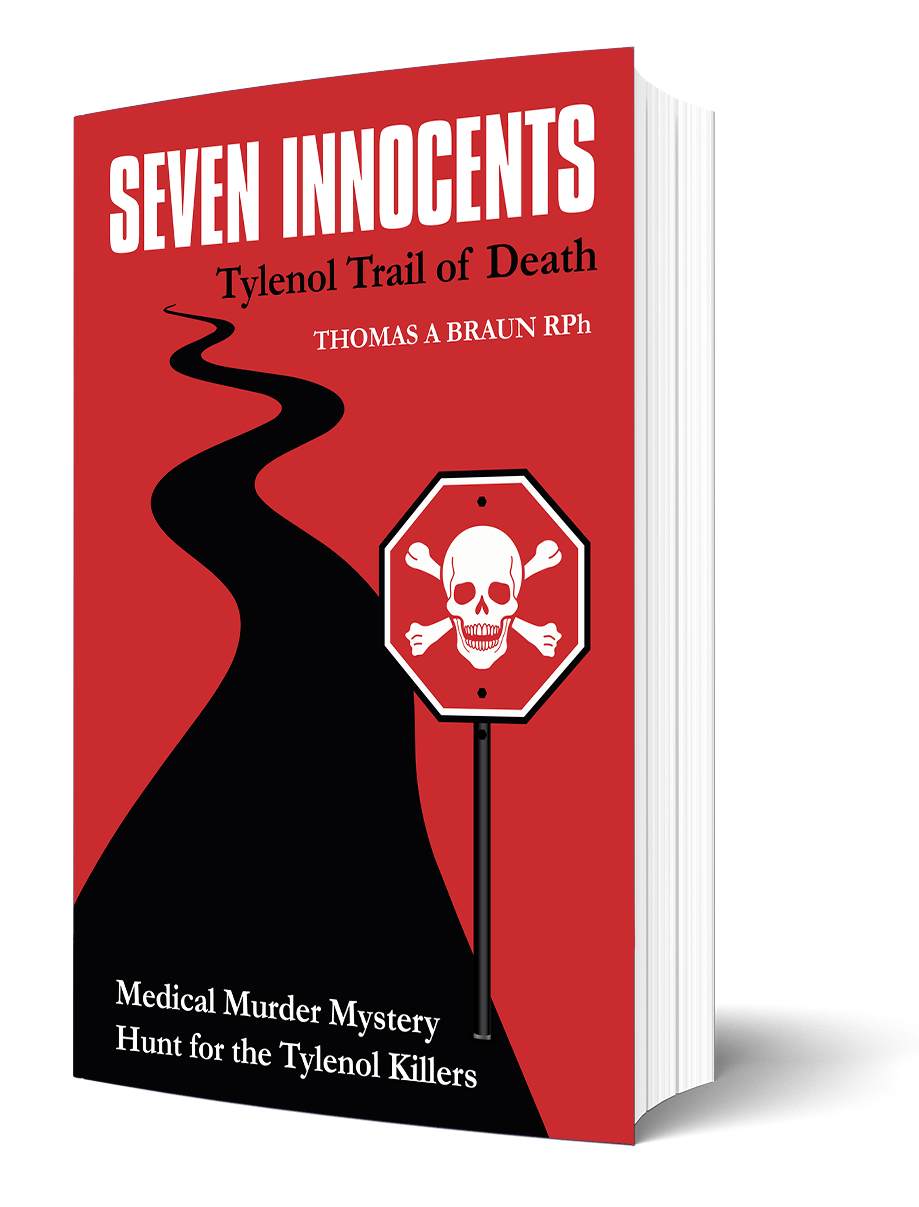
Readers will discover the truths never told…
Reveals that Tylenol capsules poisonings began in 1979.
Reveals William Post was convicted of poisoning Tylenol capsules in 1979
Reveals FBI and J & J knew that Tylenol capsules became a vessel for death in 1979.
Reveals that J & J created Tamper Resistant Packaging concept in 1980.
Reveals that Seven Innocents deaths could have been avoided if J & J had acted earlier.
Reveals that targeting Tylenol capsules was highly likely driven by revenge.
Reveals that the FBI ignored an extortionist who preceded Lewis by 8 months.
Reveals that J & J most likely received alerts to the coming deadly event early on.
Reveals that internal conflicts at McNeil may have played a role in the murders.
Reveals that the 1986 cyanide death from a Triple sealed package was created by the December 1981 extortionist who most likely worked for McNeil.
Evidence not conclusive, but provides the FBI with direction to close the “Cold Case”
The launch date for Seven Innocents is September 27, 2026.
Click the Newsletter icon or visit the Contact page to sign up for launch news and learn when you can pre-order your copy.
Discover the leads Braun believes could help uncover the people responsible for the murders.
Stay informed.